Free shipping across India on orders above ₹999 · First order: 10% off with GHANI10Free shipping across India on orders above ₹999 · First order: 10% off with GHANI10Free shipping across India on orders above ₹999 · First order: 10% off with GHANI10Free shipping across India on orders above ₹999 · First order: 10% off with GHANI10Free shipping across India on orders above ₹999 · First order: 10% off with GHANI10Free shipping across India on orders above ₹999 · First order: 10% off with GHANI10Free shipping across India on orders above ₹999 · First order: 10% off with GHANI10Free shipping across India on orders above ₹999 · First order: 10% off with GHANI10
The press house

Fourteen turns
a minute.

लकड़ी घाणी

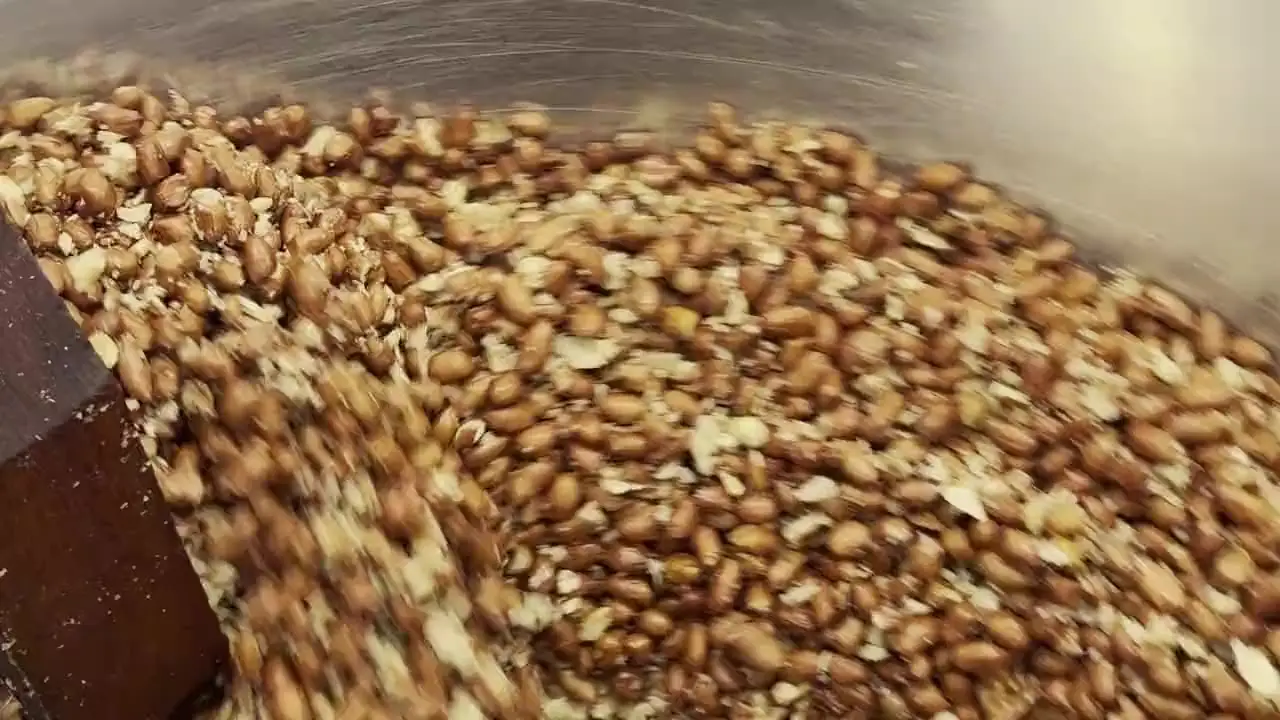
A block of neem wood, hollowed by hand, with a sal-wood pestle standing in it. That is the entire machine. Everything this brand claims comes out of how slowly that one piece of wood is allowed to turn.

Why slow matters

Heat is the whole argument.

An oilseed spends an entire season assembling things that are fragile on purpose — tocopherols, phenolics, chlorophylls, volatile aromatics, and in flax an omega-3 chain that starts falling apart above about forty-five degrees.

Crushing releases them. Heat destroys them. Every extraction method in the world is a negotiation between those two facts, and the negotiation is settled entirely by speed.

A steel expeller turns fast because time is the expensive part of the process. Friction is the price it pays, and the oil leaves the barrel somewhere near ninety degrees. It is then refined, which is a polite word for degumming, neutralising with caustic soda, bleaching with activated earth, and deodorising in a vacuum column at two hundred and forty degrees. What survives is fat and calories, which is all it was ever meant to be.

A ghani turns at fourteen. It takes two and a half hours to do what an expeller does in fifteen minutes, and it gives up a third of the oil. In exchange, the mortar never exceeds forty-one degrees, and nothing in the seed has to be put back afterwards because nothing was taken out.

A Tuesday

One day at the press.

Two charges a day, two press days a week. This is the entire production capacity, and we have chosen not to grow it.

04:40

The shutter goes up

Before the heat. The press house faces east and the first charge goes in while the floor is still cold from the night.

05:15

First charge

Forty kilos of sorted seed into the mortar. The beam is walked round by hand for the first three rotations to seat the load.

05:20

The motor takes over

Fourteen rotations a minute. From here it is two and a half hours of nothing but turning. Somebody sits with it the whole time.

07:50

The first draw

Cloudy oil runs down the channel into steel. The presser tastes it. If it is not right, the charge is pulled and fed to cattle rather than bottled.

08:30

Second charge

The mortar is scraped, not washed. Water in a ghani is the one thing that ruins a press.

16:00

Into settling

The day's oil goes to rest for seventy-two hours. Nothing is filtered warm.

Thu

Muslin, twice

Two passes through cotton. What comes out is bottled the same afternoon and stamped with the press date.

Four things worth correcting

Most of what is written about this is marketing.

"Cold pressed" and "wood pressed" mean the same thing.

They do not. Cold pressed only promises that no external heat was applied — a steel expeller running at 200 rpm generates plenty of its own, often 80–90°C. Wood pressed means a wooden mortar turning slowly enough that friction never builds. Every wood pressed oil is cold pressed; the reverse is not true.

Filtered oil is purer than unfiltered oil.

Beyond a muslin pass, filtering an oil clear needs either pressure, heat, or bleaching earth. The haze in a fresh ghani oil is suspended seed matter, and it settles on its own. Perfectly clear oil on a supermarket shelf is a processing achievement, not a purity one.

A higher yield means a better press.

It means the opposite. Getting 48% oil out of a groundnut requires hexane. Our press leaves roughly a third of the extractable oil in the cake, which then goes to dairy cattle in the same villages the seed came from.

Refined oil is safer because it has a higher smoke point.

Smoke point matters, and refining does raise it. But most Indian cooking sits well below 200°C, and our groundnut and mustard oils are already at 205°C and 250°C. Choose the oil for the dish rather than buying a deodorised one for everything.

Now taste the difference the speed makes.